

After the Storm
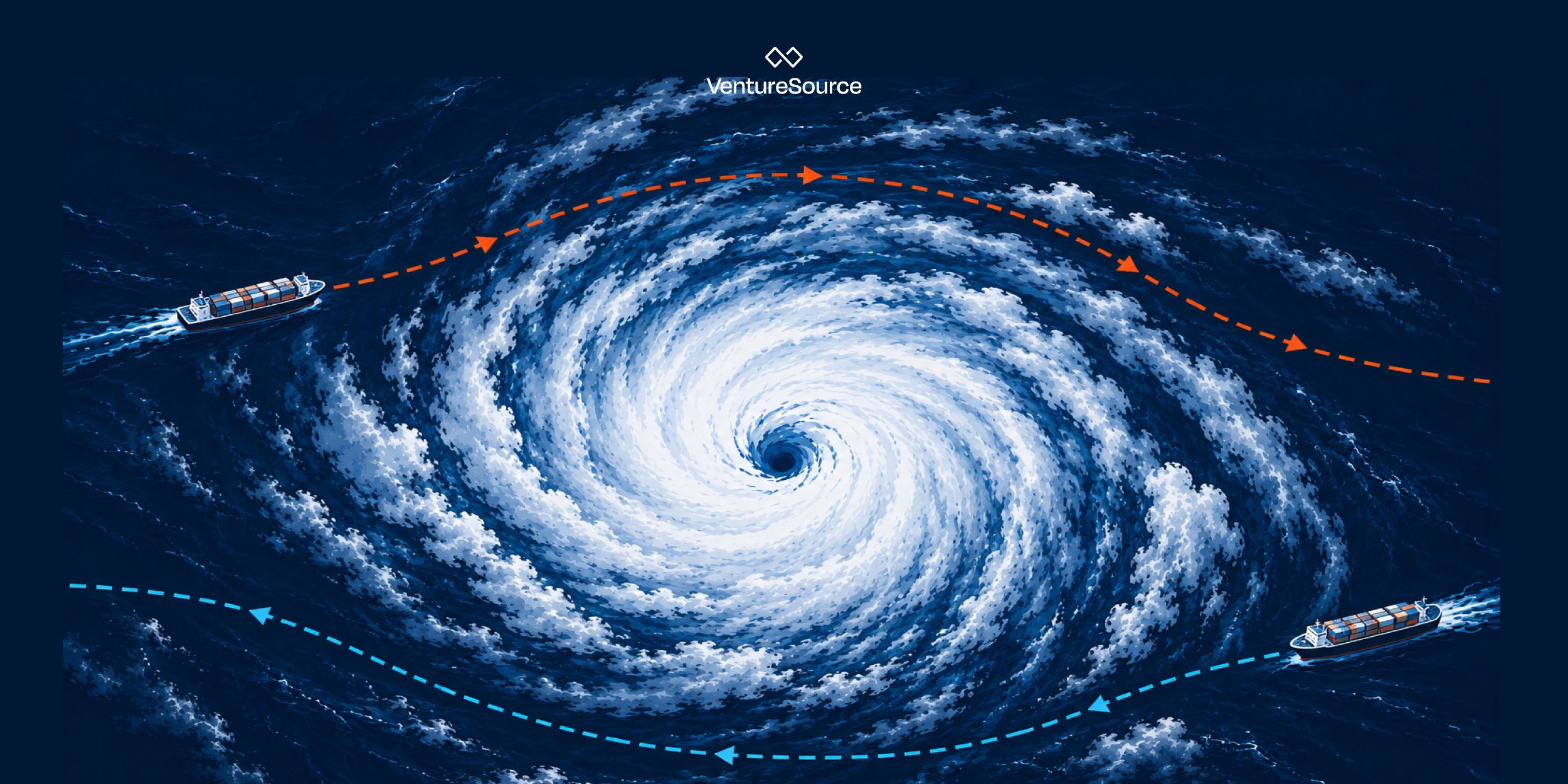
In August, some container ships waited as long as 12 days to berth at Shanghai, Ningbo and Shenzhen.
The typhoons behind those delays closed ports for a day or two at a time. The effects lasted for weeks.
That's the part many people don't expect. The storm passes quickly. The backlog doesn't.
This year, weather has become one of the biggest sources of volatility in ocean freight. In some places the problem is too much water. In others, it's not enough.
Too much water
This has been an unusually active summer in the Pacific. A series of typhoons has moved through the region, disrupting ports and operations across Asia. Some of the busiest ports in the world have had to close more than once, often with little time to recover before the next storm arrived.
When a port closes, ships don't stop coming. They wait offshore, and containers build up in the yard. When the port reopens, it has to work through that backlog while new ships keep arriving on schedule. There usually isn't enough extra capacity to catch up quickly.
In our experience, one day of closure can take about a week to recover from. In normal conditions, a ship moves through a major Asian port in one to two days. Recently we've seen that stretch to four or more days.
Too little water
At the Panama Canal, the problem is drought.
El Niño has lowered the water in Gatun Lake, which feeds the canal's locks. To save water, the canal is reducing daily transits from 36 to 32 and limiting how heavily the largest ships can load.
Four fewer ships a day may not sound like a big change. But it adds up day after day on one of the main routes between Asia and the U.S. East Coast. Ships that can't get through have to wait, carry less or take a longer route.
How the delays spread
Weather isn't the only pressure right now. Most container ships are still going around Africa to avoid the Red Sea, which keeps ships and containers tied up longer than normal. Storms and drought add to that:
Ships leave Asia late.
Delayed ships arrive at U.S. ports around the same time, which creates new congestion there.
Empty containers take longer to get back to Asia, which leaves less equipment for the next round of shipments.
A typhoon in Asia can easily turn into a late delivery in Michigan several weeks later.
What importers can do
We can't control the weather, and neither can our customers. What we can do is plan around it:
Plan beyond the quoted transit time. Quoted transit times assume normal conditions. During typhoon season and peak season, build in extra time.
Pay attention to the origin port. When waiting times go up at ports in Asia, delays at U.S. ports usually follow a few weeks later.
Book as early as you can. When space is tight, cargo that is already booked moves first.
Protect your critical parts. Give the most buffer to the items where a delay would cost you the most.
Bottom line
The storm is the delay everyone sees. The backlog afterward is often what costs the most time.
Disruptions like these will keep happening. The companies that handle them best are usually the ones that planned for them early.
Learn how VentureSource helps importers improve visibility, respond faster, and keep freight moving: VentureSource Lead Logistics